scroll down for a list of useful websites and books ·
scroll down for a list of useful websites and books ·
Cohousing originated in Denmark in the 1960s as a response to growing social isolation and the challenges of balancing work and family life. The first recognized community, Sættedammen, was founded in 1972 by a group of families seeking a way to combine private homes with shared spaces that encouraged collaboration and mutual support. This model was characterized by resident-driven design, communal decision-making, and shared amenities such as kitchens, gardens, and play areas.
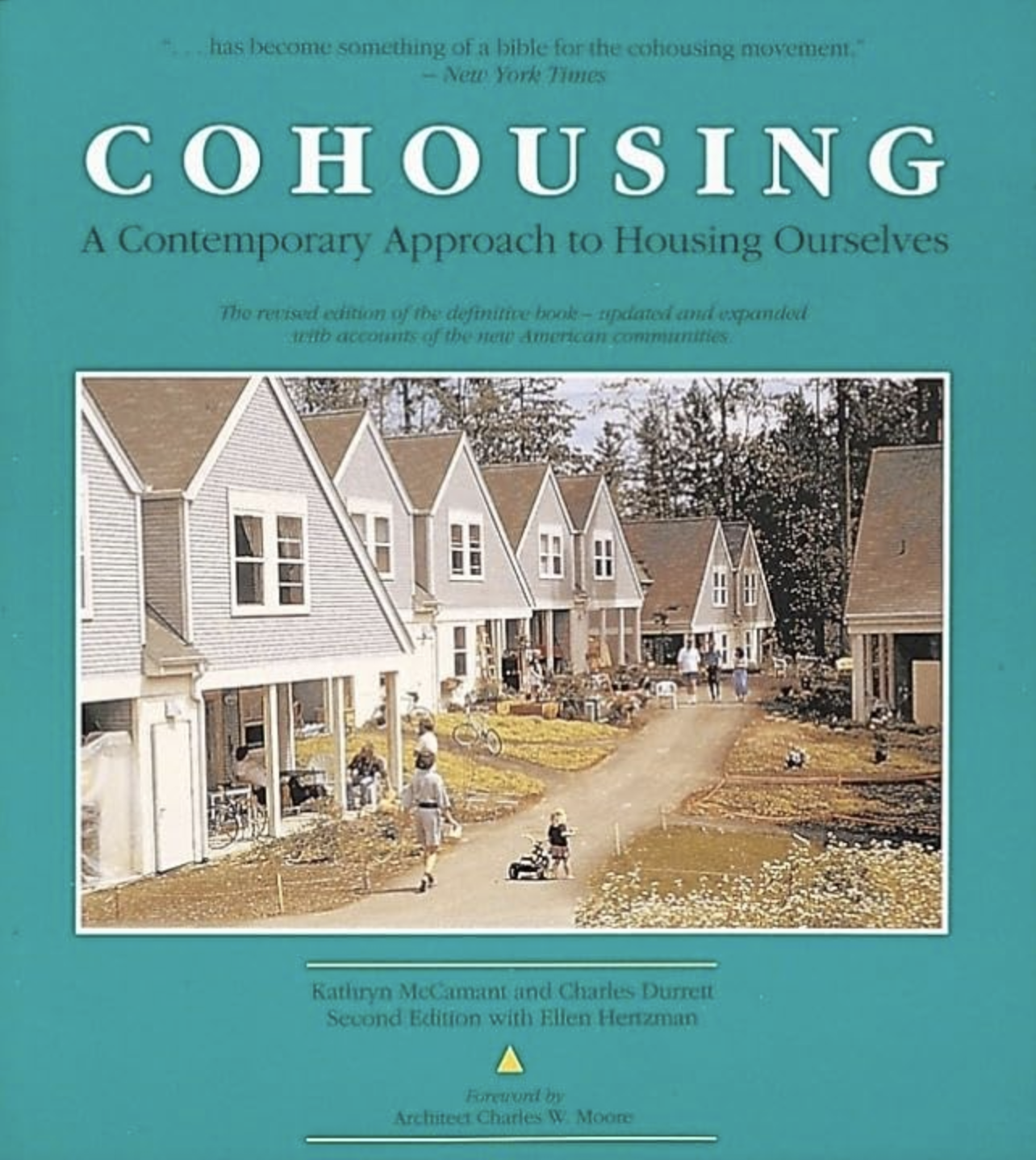
From Denmark, the cohousing idea spread internationally, beginning in the late 1980s when American architects Kathryn McCamant and Charles Durrett introduced the model to North America through their book Cohousing: A Contemporary Approach to Housing Ourselves (1988). Since then, cohousing has taken root across Europe, North America, and beyond, adapting to different cultural and economic contexts. While the details vary, the Danish principles of shared governance, collaborative design, and community-minded living remain at the heart of cohousing worldwide.
Wondering if cohousing is a good fit for you?
Cohousing can be a deeply rewarding way to live, but it’s not for everyone. It’s ideal for people who value connection, collaboration, and a sense of shared purpose with their neighbors while still maintaining the privacy of their own home. Living in cohousing means participating in group decisions, contributing to shared meals or maintenance, and being open to honest communication and compromise. It often appeals to those who want to reduce isolation, share resources, and live more sustainably. If you’re energized by community involvement and appreciate the give-and-take of collective living, cohousing may be a great fit; if you prefer more independence or minimal interaction, it may feel too demanding. Visiting a community and talking to residents can be a good way to find out if the lifestyle resonates with you.
Find out more
Here are some excellent websites that explore the concept, philosophy, and practice of cohousing. See below for some recommended books.
Canadian Cohousing Network (cohousing.ca)
Offers information specific to Canada, including existing and forming communities, educational events, and guides to starting a cohousing project.Cohousing Association of the United States (cohousing.org)
The most comprehensive English-language resource. It covers cohousing history, core principles, community directories, and articles about design, governance, and daily life.Sociocracy for All (sociocracyforall.org)
While not limited to cohousing, this site offers extensive materials on shared governance. Driftwood Village uses sociocracy as its governance model.Cohousing-L Mailing List Archive
A long-running discussion forum where cohousing residents and founders share practical advice, challenges, and philosophical reflections.